Not every difficulty in a learning environment is about academics. Sometimes it has more to do with how a student’s nervous system responds to the world around them.
In a school setting, noise, lights, expectations and constant stimulation can easily become overwhelming for some students. Stress builds up, attention fades, and frustration may turn into disruptive behavior.
In moments like these, a student doesn’t always need another instruction or correction. What they may need is a moment to pause, breathe, and reset.
👉 So, what if the school itself could offer a space designed exactly for those moments? A place where, instead of escalating, the situation can gently settle and regulation can begin again.
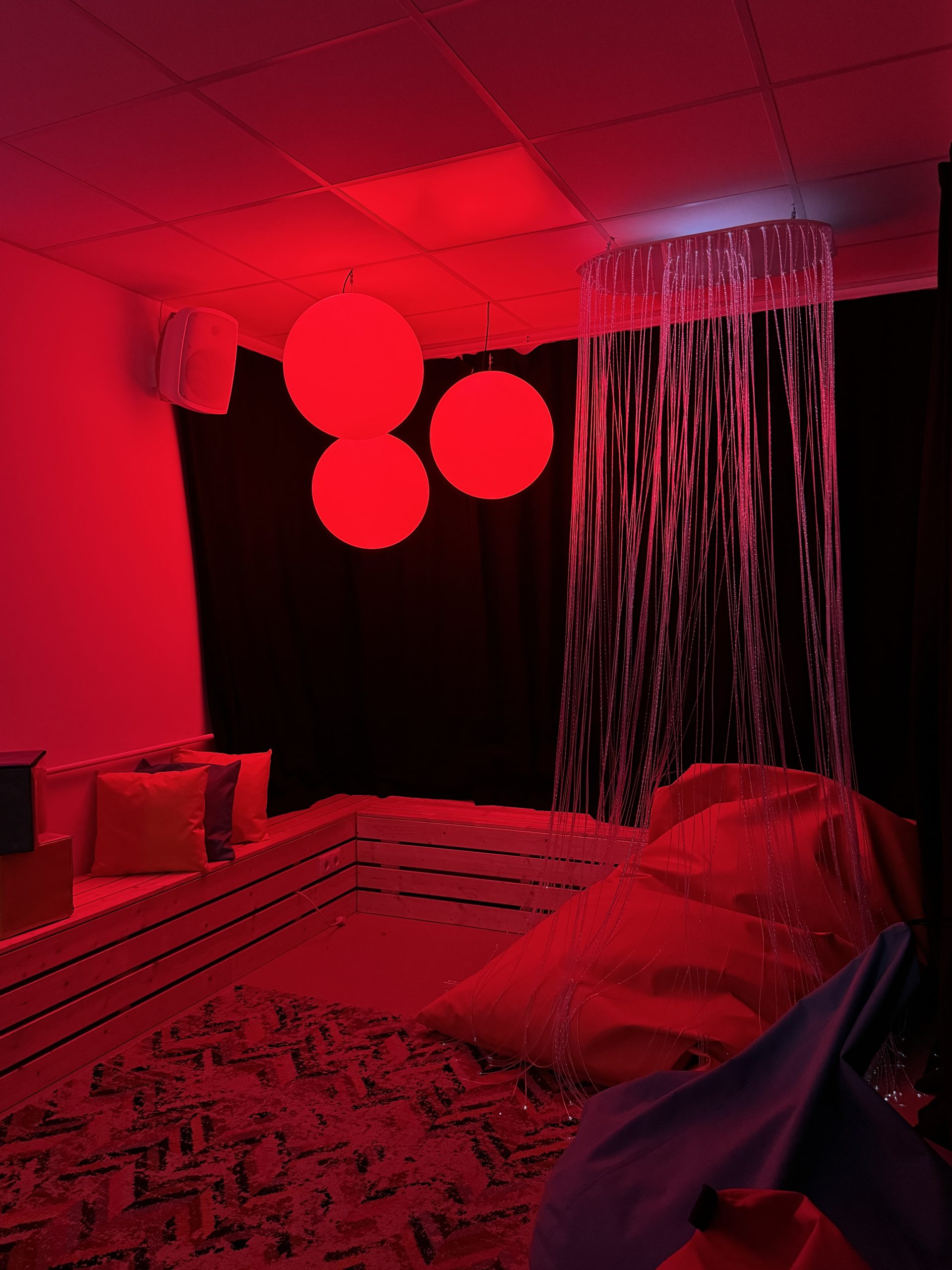
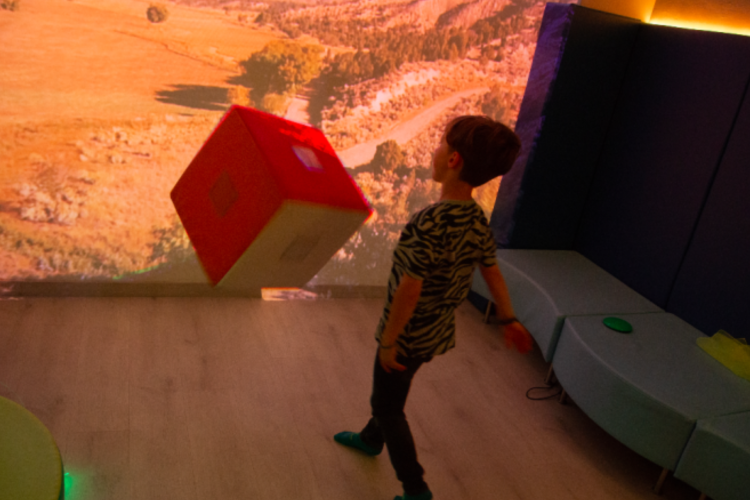
At Šiaulių Salduvės progimnazija, a mainstream school in Lithuania, students aged 7 to 15 have access to a multisensory room designed to support emotional regulation, learning, and well-being throughout the school day.
It is used by students with a wide range of needs — including Autism Spectrum Disorder, learning difficulties, or emotional and behavioral challenges — as well as by those who simply need a moment to pause and regain focus.
Equipped with Qinera’s multisensory technology — where light, projection, sound, vibration, and other sensory elements work in sync to create interactive and immersive environments — the space offers a predictable setting where students can calm down, regulate sensory input, and reconnectwith learning before returning to class.
Why a multisensory space in a mainstream school and how it works?
One of the goals at the school was to create a more inclusive learning environment where every student can participate in a way that fits their needs.
“In a modern school, where inclusive education is a key focus, such a space helps support students experiencing stress, sensory difficulties, or emotional and behavioral challenges.”
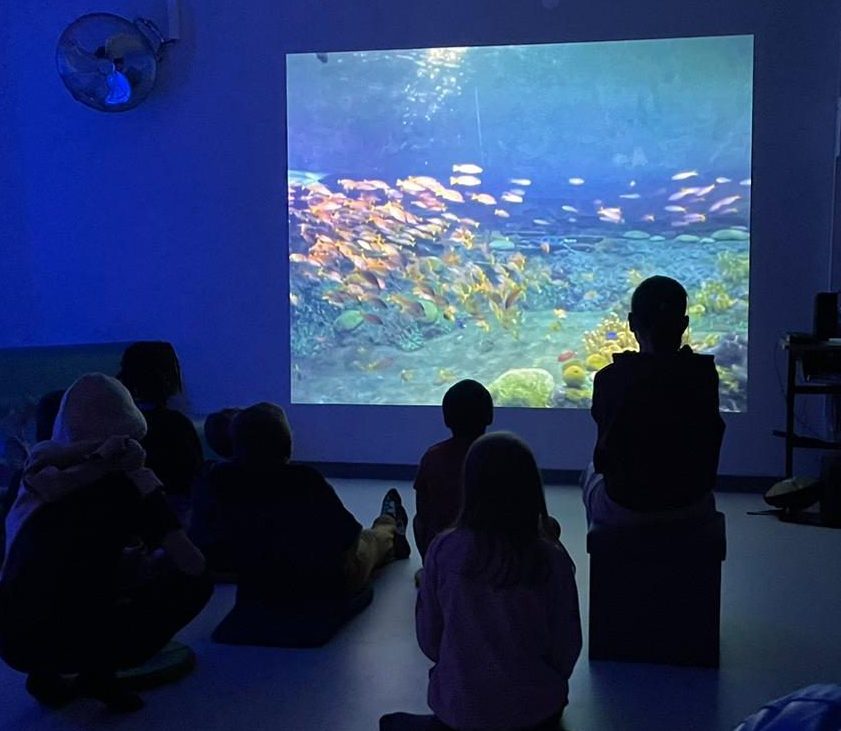
Its use varies depending on the situation. Some students attend scheduled sessions, particularly those receiving additional support, while others use the space for short sensory breaks to calm down or regain focus during the school day.
In one lesson, for example, a student who was struggling to focus and showing behavioral difficulties was brought into the sensory space.
“The student calmed down, regained focus, and after about 15 minutes returned to the lesson and successfully completed the tasks.”
Beyond these moments, the space is also used in more structured sessions. These may be individual or in small groups and are guided by the school’s multisensory specialist. Activities can include sensory exploration, emotional recognition and regulation, as well as attention and concentration training. And It is also sometimes used for integrated lessons linked to the curriculum — for example in subjects such as music, art, or ethics.
What elements does the space include?
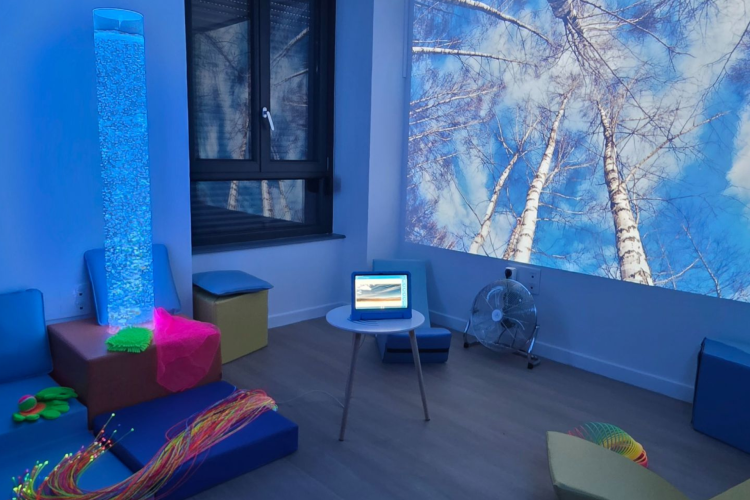
The multisensory room includes Qinera’s SHX system, which allows all the elements in the space—lights, sounds, projections, and vibration—to shift at once, creating an immersive and enveloping atmosphere. One of the key features of this technology is that it enables users to actively interact with the environment. Students can do this through control devices such as a tablet, the Button 6 controller, or a sensory cube.
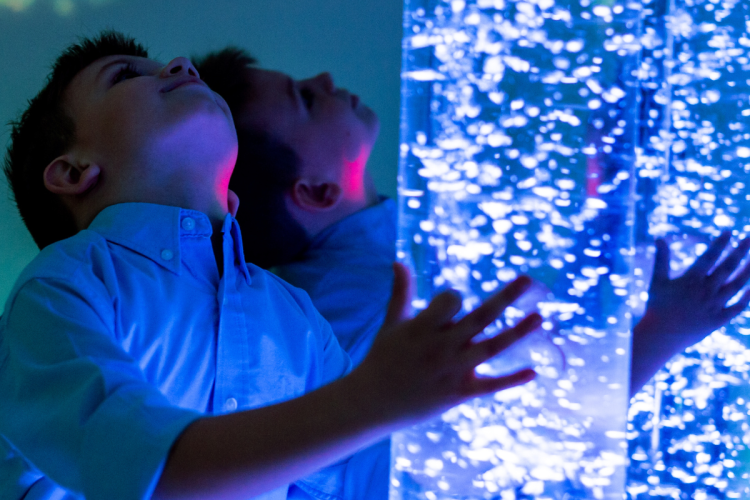
In practice, this opens the door to many different types of activities. For example, a student might sit on the vibroacoustic chair while listening to relaxing sounds and watching slow-moving visuals projected on the wall. In another activity, students may explore textures with sensory toys or observe the bubbles of the bubble tube rising slowly while practicing breathing exercises. They can also interact with the fiber optic lights of the Luminea fountain, playing hide-and-seek or using them during guided sensory activities.
Students can also move around the bubble pool or advance through a story using the controller, while lights, sounds, and projections change in sync. Additional effects can enhance the experience—for example, a fan may turn on during a windy landscape scene, or a bubble machine may fill the room with bubbles.
Benefits of a multisensory space in school
Relax and reduce emotional tension: When students feel overwhelmed or anxious, the space offers a quieter and more predictable setting where they can slow down, breathe, and gradually calm their nervous system.
Develop self-regulation skills: Through guided sensory activities, students learn to recognize emotions and find strategies to manage them during challenging moments of the school day.
Improve attention and focus: By regulating sensory input and reducing distractions, students can reset and return to lessons with improved concentration.
Support concentration and memory: Changes in colors, sounds, and projections capture students’ attention and make abstract concepts easier to retain and recall.
Feel safe: For some students—especially those with sensory sensitivities or autism—everyday classroom environments can feel intense. A controlled sensory setting offers a space where they can feel calmer, interact, communicate, or simply take the time they need to regulate and feel safe.
Encourage interaction, curiosity, and engagement: Interactive sensory elements invite students to explore, participate, and take an active role in the experience. This sense of agency often increases motivation, encourages communication, and helps students stay engaged in activities for longer periods.
Encourage social interaction: Group activities around light shows, music, or projections help students share experiences, cooperate, and build relationships in a motivating and supportive setting.
Support teachers and professionals in their daily work: The multisensory space also becomes a valuable tool for educators and specialists. It provides structured ways to support students during moments of dysregulation, helps guide emotional and sensory activities, and offers an additional environment where learning and support strategies can take place more effectively.
A positive change in the school environment
Since introducing sensory stimulation activities, the school has observed a noticeable shift in the overall climate.
Students who use the space regularly show improved emotional regulation, better concentration, greater participation in lessons, and stronger emotional well-being.
For the team at Šiaulių Salduvės progimnazija school, the multisensory room represents a broader vision of education.
“Multisensory spaces in schools are extremely valuable. They help ensure students’ emotional well-being, promote self-regulation, increase inclusion, and create more favorable conditions for successful learning.”
👏 Special thanks to Officeday, our partner in Lithuania, for bringing this project to life.
Free Project Design
If you want to learn more about the benefits of Multisensory Environments or see how you could adapt it to your space, therapeutic goals, and users, you can send an email to hello@qinera.com.
For people with Autism Spectrum Disorder (ASD), the world can sometimes feel chaotic, overwhelming, and difficult to predict. This difficulty in processing environmental stimuli often...
A library in eastern France, Le Bélieu, has become the first library in France to integrate a multisensory space: an immersive and interactive environment with...
If you are looking for a unique and engaging multisensory experience for your therapeutic or educational interventions, you are in the right place. In this...
This website uses cookies so that we can provide you with the best user experience possible. Cookie information is stored in your browser and performs functions such as recognising you when you return to our website and helping our team to understand which sections of the website you find most interesting and useful.
Strictly Necessary Cookies
Strictly Necessary Cookie should be enabled at all times so that we can save your preferences for cookie settings.
If you disable this cookie, we will not be able to save your preferences. This means that every time you visit this website you will need to enable or disable cookies again.