Rocio Chaile
International Communications Lead at Qinera
Read more posts


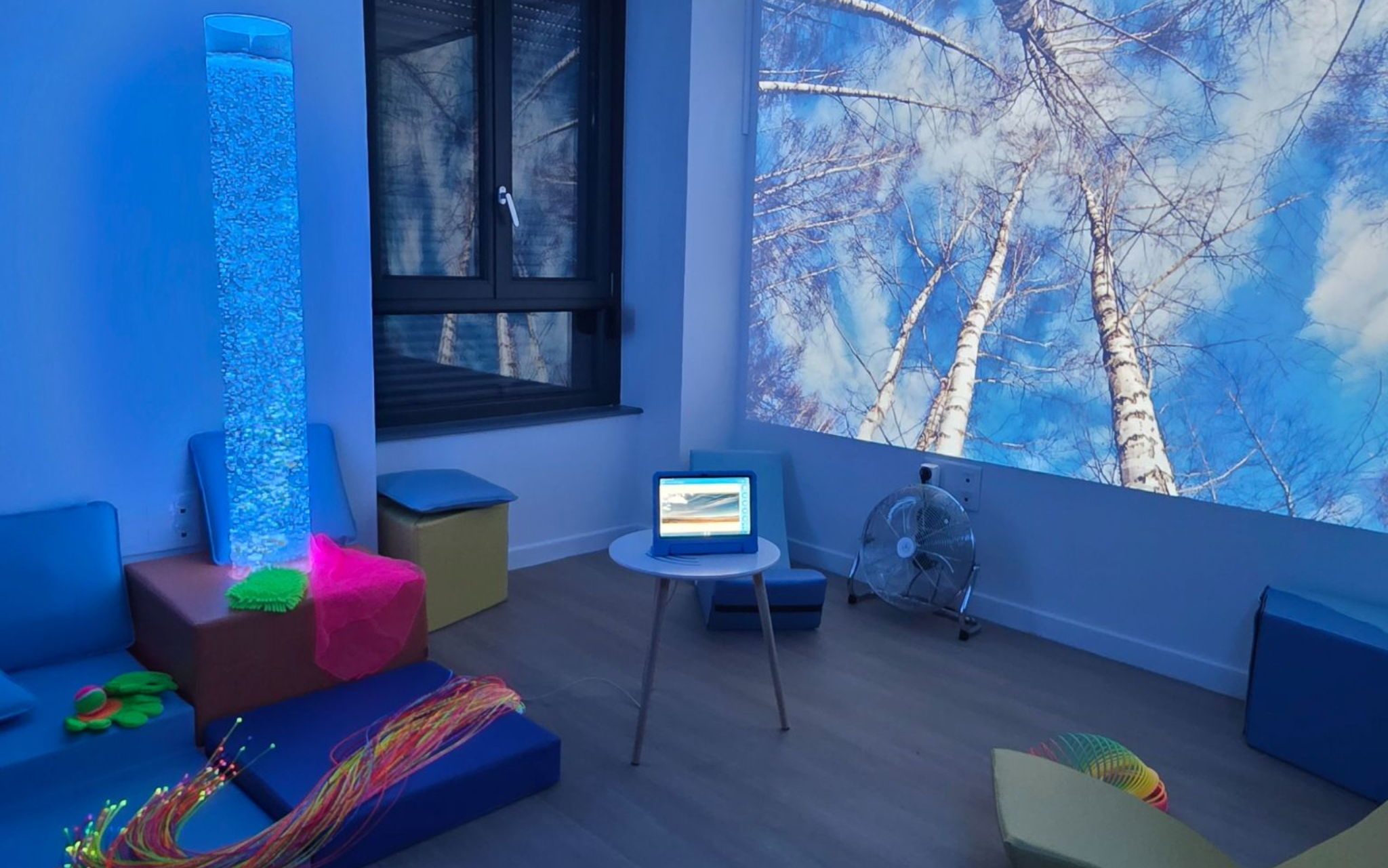
A library in eastern France, Le Bélieu, has become the first library in France to integrate a multisensory space: an immersive and interactive environment with Qinera’s interactive SHX technology that combines light, sound, projections and vibroacoustic stimulation to create calming or stimulating sensory experiences. Designed to be accessible to everyone— children, young people, older adults, and people who are neurodivergent or have physical disabilities— this space expands the library’s cultural experience by introducing new ways of accessing culture beyond traditional reading, through the senses, emotional engagement and connection.
The library thus moves away from being only a place for consultation and silence and becomes a space that supports, regulates and prepares people to engage with knowledge at their own pace and according to their needs. In addition, the space is open to the community: medical-social centres, professionals and families can use it for sensory stimulation and workshops, strengthening the library’s role as a shared public resource.
The environment plays a key role in how people engage with culture. Imagine a space defined by reading in strict silence, tension and a cold atmosphere—conditions that may support concentration for some, but make it harder for others to relax, focus or feel welcome. This raises an important question: how can libraries support different ways of engaging with culture without losing their identity?
Integrating a multisensory room into a library does not mean changing its identity, but expanding it: incorporating experiences that prepare, accompany and enrich the relationship with cultural content.
Not everyone accesses knowledge through traditional reading, nor with the same levels of attention or sensory tolerance. Let us think, for example, of a person with autism. For them, a conventional library can be challenging: difficulty concentrating, filtering environmental stimuli and sustaining attention over time. A multisensory space within the library offers a controlled, predictable and adaptable environment where the person can self-regulate, feel safe and prepare to access other cultural activities within the same centre.
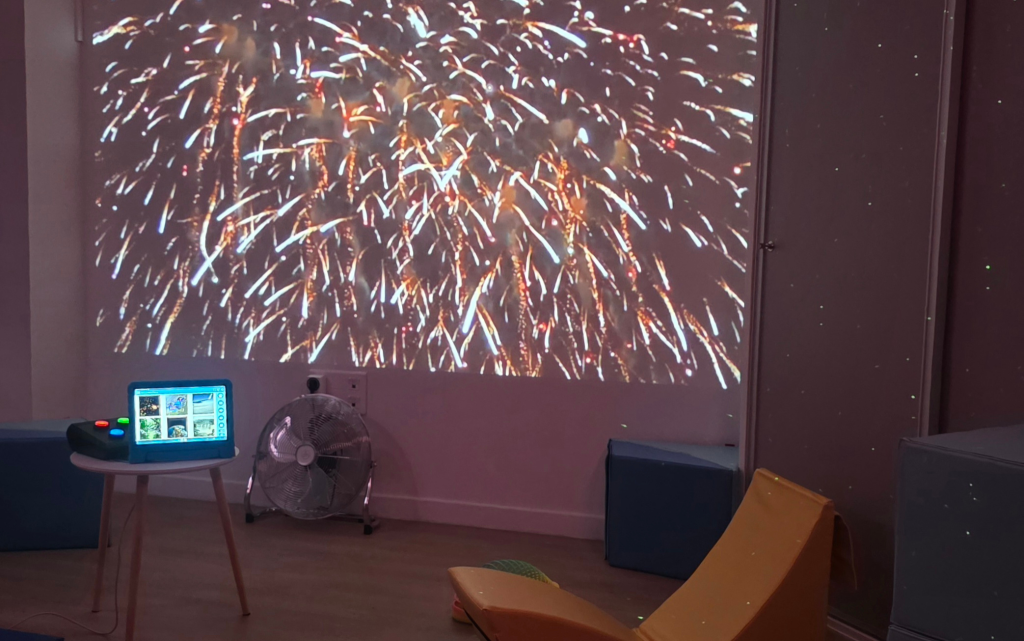
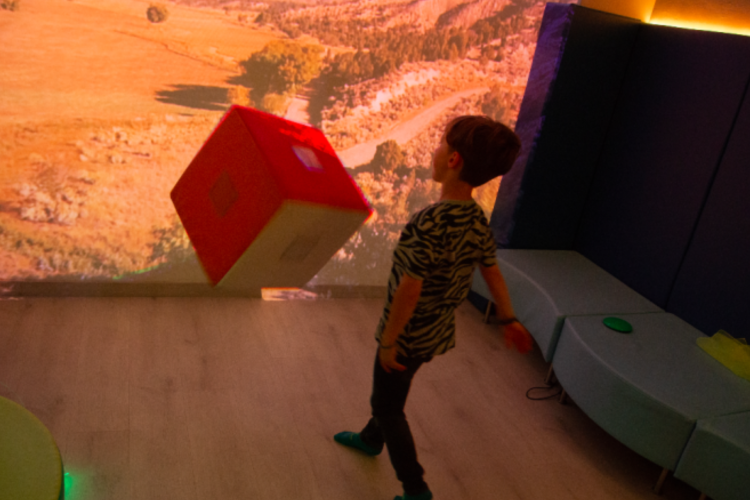
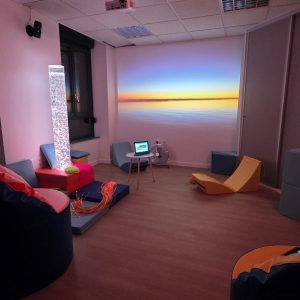 The multisensory space at Le Bélieu integrates Qinera’s SHX technology. This system allows all the elements in the room— vibroacoustic stimulation, projections, lighting, sound and other sensory effects—to be synchronised at the same time, creating immersive sensory scenes that can recreate real environments such as a forest, the ocean or other settings. These scenarios can be adapted to different moments, activities and individual needs.
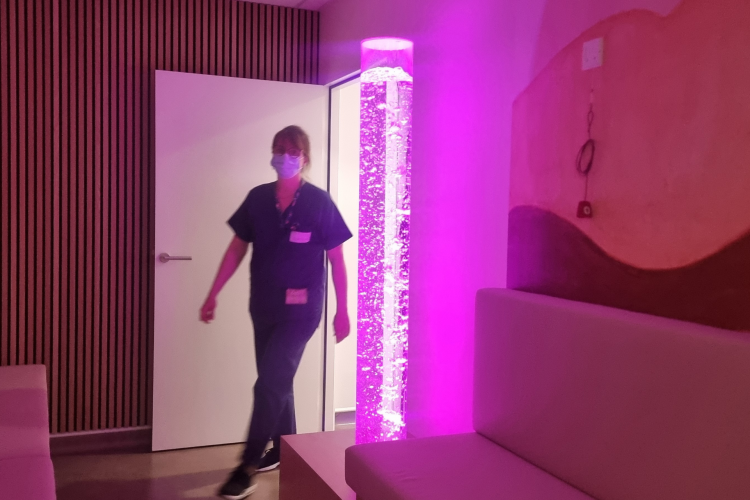
One of the key values of this technology lies in how people can interact with the space. Different control systems—such as Button 1, Button 6 and interactive dice—enable users to engage with the environment according to their own mode of access. Through these controllers, users can change the colour or intensity of the bubble tube and fiber optics, launch sensory scenes, learn through play, or create simple games using other sensory elements such as ultraviolet light.
This capacity for interaction gives users a sense of agency and control over the space, turning them from passive observers into active participants. It also opens up new cultural possibilities: storytelling through projections, playful learning experiences, and moments of calm and exploration that respond to the people using the room.
1. A different and immersive way of learning
In a multisensory room, learning happens through experiences in which users actively interact with the environment—its colours, sounds, projections and sensory elements. This stimulates curiosity, exploration and participation, allowing people to learn in ways that go beyond traditional reading or listening.
2. Preparing people to read, learn and participate
By reducing sensory overload and creating a calmer atmosphere, multisensory environments help people focus, pay attention and engage more easily with reading and learning activities.
3. Activation when engagement and energy are needed
Beyond calm, multisensory spaces can also activate the senses when more energy is needed. Light, sound, movement and interaction help spark motivation and engagement, supporting learning and participation in a more dynamic way.
4. Storytelling through audiovisual contents
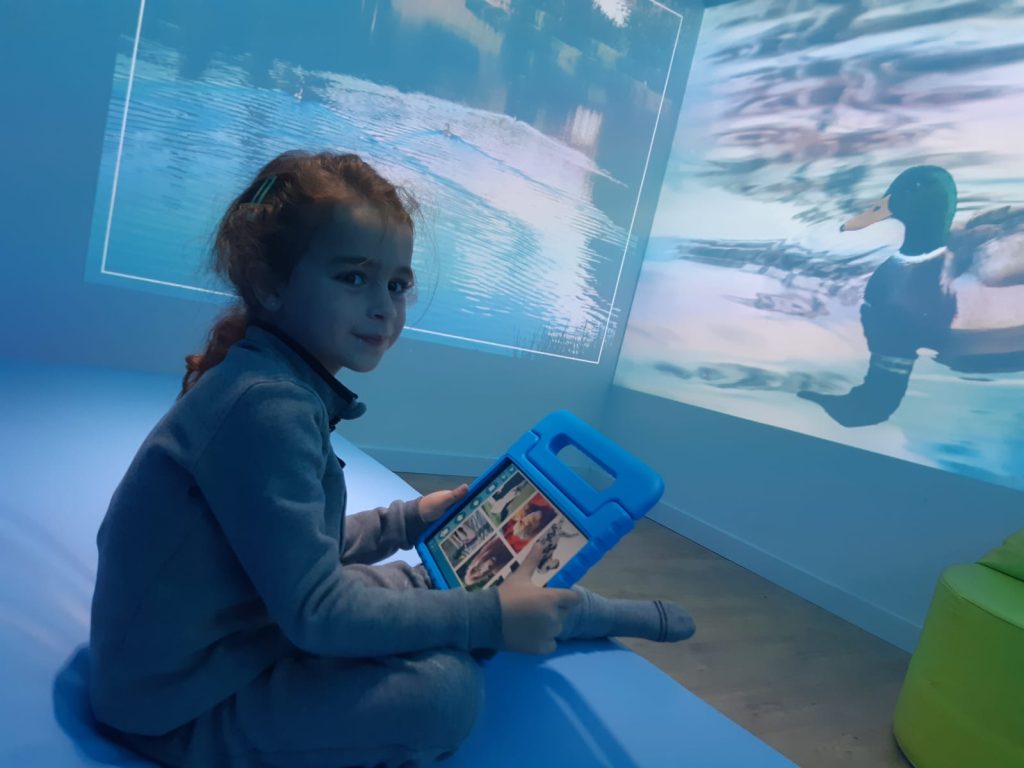
The multisensory space transforms storytelling into an immersive and interactive activity. Stories are told through projections, and as the narrative unfolds, the colours, sounds, vibrations and different elements of the room change in sync with what is happening. Using simple controllers, users can interact directly with the story to move it forward, allowing children to engage actively with the space and strengthening comprehension, imagination and emotional connection.
5. Designed for different users and needs
The multisensory room is designed to adapt to different users, ages and situations. Qinera’s SHX technology includes a library of content created by therapists and professionals and allows new content to be added, making it possible to tailor each experience to specific needs.
Le Bélieu shows that it is possible to innovate in cultural spaces without losing their essence. By integrating a multisensory space, the library has created a model that can be replicated in other libraries and institutions, while allowing more people to access, participate in and experience culture in ways that are more welcoming and aligned with their own needs.
👉 This project was made possible thanks to ArchiZenco, our partner in France, whose collaboration was key to bringing this multisensory space to life.
If you want to learn more about the benefits of Multisensory Environments or see how you could adapt it to your space, therapeutic goals, and users, you can send an email to hello@qinera.com.

5 December 2025
If you are looking for a unique and engaging multisensory experience for your therapeutic or educational interventions, you are in the right place. In this...
30 May 2025
At Hôpital Privé du Confluent in Nantes, France, multisensory rooms have been incorporated to enhance the patient experience. Waiting before surgery is a delicate moment....