Rocío Chaile
International Communications Lead at Qinera
Read more posts


Many people still believe that a multisensory room is a dark space filled with bubble tubes, fibre optics, and relaxing lights. That was revolutionary in the 1970s.
Today, it is no longer enough. Modern multisensory environments are not defined by the equipment they contain, but by the experiences they enable. The difference between a passive sensory room and an interactive multisensory environment can determine whether a user simply observes stimuli or actively participates, communicates, learns, and develops new skills.
So, are traditional sensory rooms or Snoezelen, and multisensory environments really the same thing? Not anymore.
The Snoezelen concept was developed in the Netherlands in the 1970s as a way to provide sensory stimulation for people with profound disabilities. The idea was to create a calm space where people could relax and engage with light and sound, at their own pace.
Since then, multisensory spaces have evolved. Today, they can be designed not only for relaxation, but also for therapy, learning, leisure, communication, emotional regulation and personal development. Through the combination of light, sound, projection, vibroacoustic stimulation and synchronised sensory effects, they can create immersive experiences tailored to each person’s needs, preferences and sensory profile.
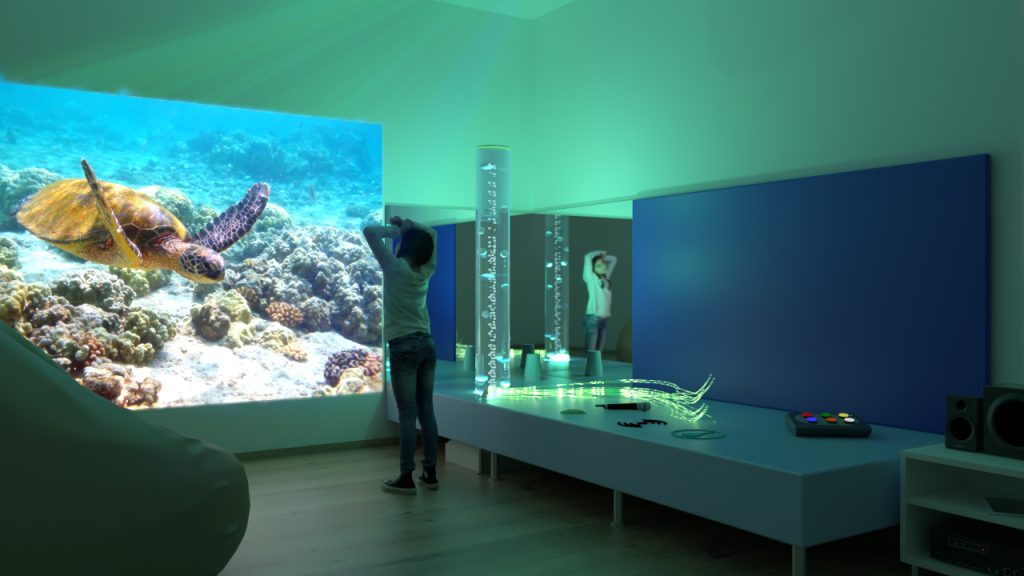
The key difference is participation. In a traditional sensory room, people mainly experience sensory stimuli. In an interactive multisensory environment, they can actively take part, explore cause and effect, build autonomy, develop new skills and interact with a space that responds to them.
In Qinera’s multisensory environments people can actively participate in the experience, make choices and engage with activities tailored to their needs, interests and goals.
This is made possible through accessible control methods, personalised audiovisual content and a fully synchronised ecosystem where light, sound, projection and sensory devices work together to create an immersive sensory experience.
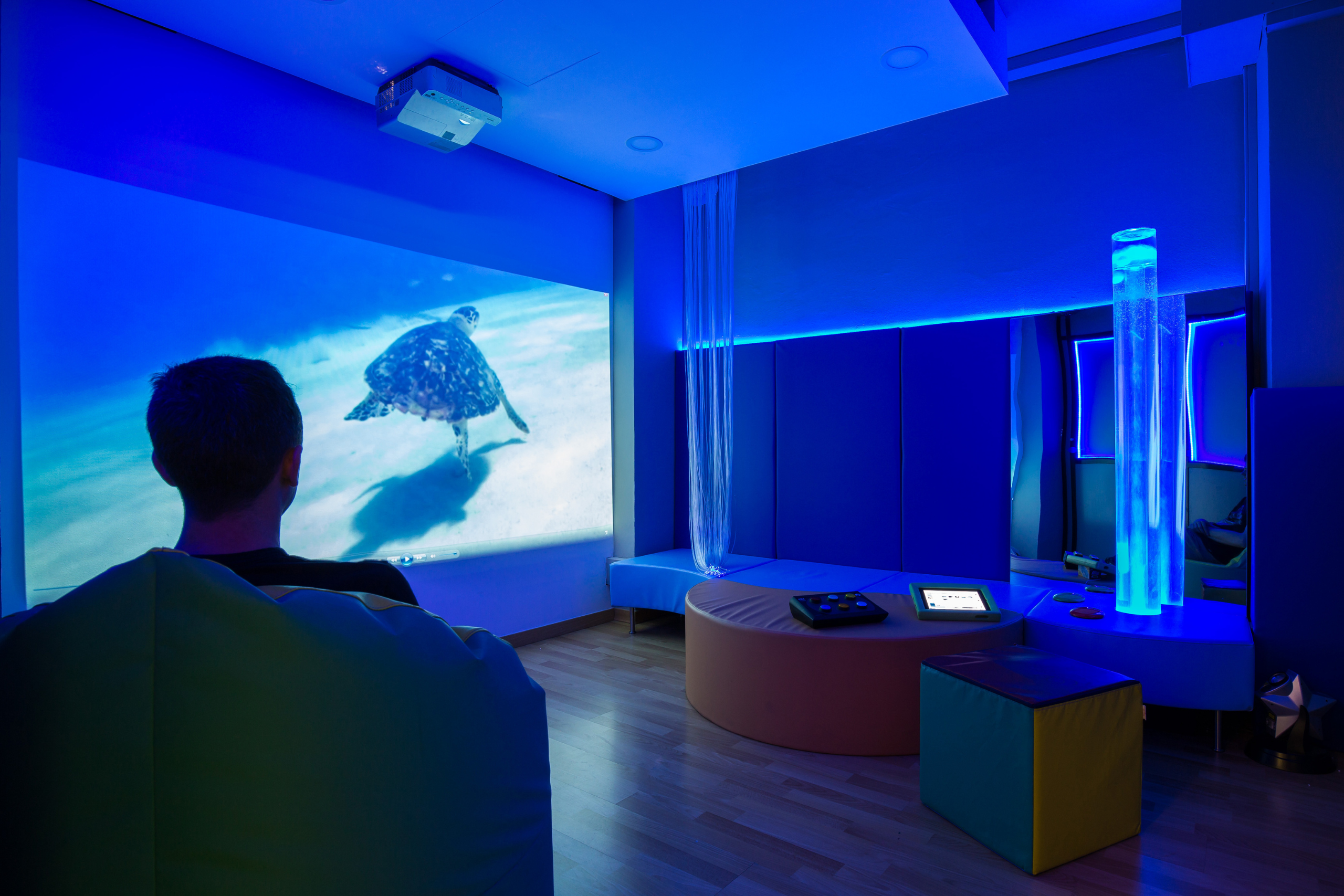
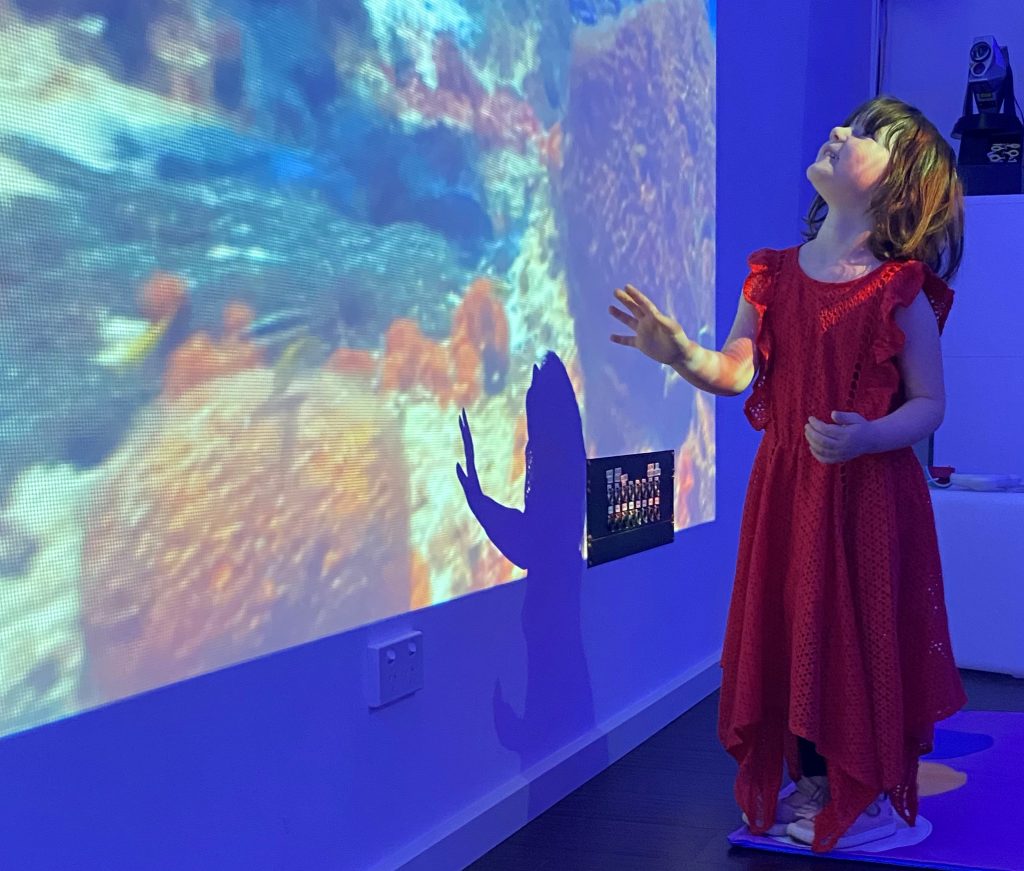
 Press a button and the room becomes an ocean: blue light fills the space, moving water is projected onto the walls, waves can be heard in the background, the bubble tube glows blue, and vibroacoustic elements gently vibrate in rhythm with the sound. Press another button and the room becomes a forest. The transformation is immediate, coherent and predictable. That coherence matters. Many users — including people on the autism spectrum — do best in environments where what they see, hear and feel tells the same story.
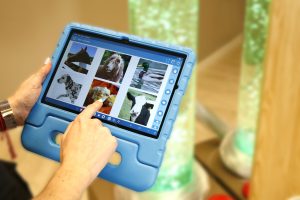
Qinera’s technology allows users to control the environment through the access method that works best for them, including tablets, switches, voice control and eye gaze technology.
A person with very limited motor abilities can transform the entire room with a large single switch, while someone using an eye gaze or a communication device can choose activities, change environments or trigger sensory experiences. Every action creates an immediate response, helping users understand cause and effect, build autonomy, and make choices.
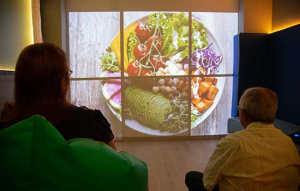
Professionals have access to an extensive library of audiovisual content created by therapists and designed for learning, relaxation, cognitive stimulation, leisure and emotional regulation.
You can also add your own content from YouTube, USB devices, computers or personal files, making it easy to tailor each session to each person and each goal. A care home, for example, can use videos connected to a resident’s memories and life story, while a school can incorporate curriculum content or activities in a student’s home language.
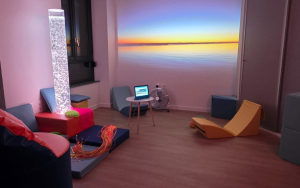
Multisensory environments are modular — you don’t need to start with everything. A centre might begin with a bubble tube and one controller, then gradually incorporate fiber optics, projection, additional controllers, UV lighting, vibroacoustic elements and other sensory products over time.
Every element is fully compatible within the same ecosystem, making it easy to expand the environment as needs and budgets evolve.
A multisensory environment can become a space for relaxation, structured learning, cause-and-effect activities, cognitive stimulation, communication or emotional regulation — all within the same day, adapted to different people, different needs and completely different experiences.
Creating environments where everyone can participate is one step towards a more inclusive world 💜.
📚 To learn more about the specific benefits of multisensory rooms for different users, explore our blog.
👉 Snoezelen® is a registered trademark of the Rompa Group.
If you want to learn more about the benefits of Multisensory Environments or see how you could adapt it to your space, therapeutic goals, and users, you can send an email to hello@qinera.com.